
Have you ever wondered why taking action beats raw talent every single time, or how you can leverage new technology like AI without losing the heart and soul of your message? In this episode of Speaking with Confidence, we’re getting to the root of what it means to communicate with clarity, build your confidence as a storyteller, and stand out in our fast-changing world.
I’m Tim Newman, your host, a recovering college professor turned communication coach, and today I’m joined by the incredible Jim Edwards. Jim’s a true legend in the world of online business and communication, with almost three decades of experience helping entrepreneurs, coaches, speakers, and professionals get their messages heard. Not only is he a bestselling author of over three dozen books, but he’s also helped countless people find their voice and capitalize on their knowledge.
Listeners will also hear actionable advice on:
- Finding and sharing your own stories (even if you think you don’t have any)
- Developing patience and delayed gratification for long-term success
- Building confidence as a speaker through preparation and practice
- Using writing as a tool for clarifying your thoughts and improving your communication
- Harnessing AI as a creative accelerant, not a replacement for your ideas
- Understanding the new role of creators and curators in a world awash with content
- How to recognize and communicate your true value as a coach, speaker, or business owner
Whether you’re trying to write your first book, become a more compelling speaker, or navigate the digital landscape with authenticity, this episode offers real, practical steps and mindset shifts that will help you take your message and your confidence to the next level.
I’m so grateful to Jim Edwards for joining me and sharing his wisdom (and contagious enthusiasm). If you’re looking for even more confidence-building resources, don’t forget to visit speakingwithconfidencepodcast.com for your free eBook and more tools to help you unleash your voice!
Want to be a guest on Speaking With Confidence? Send Tim Newman a message on PodMatch
Speaking With Confidence
Formula for Public Speaking
Facebook
Transcript
Tim Newman [00:00:10]:
Welcome back to Speaking with Confidence, the podcast that helps you build the soft skills that lead to real results. Communication, storytelling, public speaking, and showing up with confidence in every conversation that counts. I'm Tim Newman, a recovering college professor turned communication coach. And I'm thrilled to guide you on a journey to becoming a powerful communicator. Today, we're breaking down how to communicate with clarity, how to use AI without losing your soul, and why action beats talent every single time. Today's guest is Jim Edwards. With almost three decades of experience in online sales, Jim has made a name for himself as a trusted advisor to entrepreneurs, coaches, speakers, and professionals looking to take their message to the next level. Since 1997, Jim has been helping individuals create and publish their own books, craft engaging sales messages, and ultimately profit from their knowledge.

Tim Newman [00:00:59]:
He is a best selling author of over three dozen books, but his passion is helping other people succeed. Jim, welcome to the show, bud.

Jim Edwards [00:01:08]:
Hey, thanks for having me, Tim. I'm excited to be here. Thanks for having me.

Tim Newman [00:01:12]:
I'm excited to have you. And I highlight you're a best selling author because that's one of the things that you, you ingrained in us as we went through, you know, these last three months to adapt the mindset of whatever it is that you want to become. And by reaffirming it over and over again, it allows us to again, change that mindset and actually take action.

Jim Edwards [00:01:36]:
Absolutely. Because mindset creates action and action creates results. And if you want to get results fast, change your mindset first. And that's what most people don't do.

Tim Newman [00:01:49]:
Well, I'm just going to give everyone fair warning. You should strap in and get something to take notes with because we haven't known each other very long, but we're kindred spirits. And I told you this both publicly and privately. You've changed my life in a good way. Obviously, there's people that changed my life in a not so good way, but you changed my life in a good way and I can't thank you enough for that.

Jim Edwards [00:02:14]:
Well, thank you. I appreciate that.

Tim Newman [00:02:17]:
And one of the things where kindred spirit is about is family is so important to the both of us. And you said something that really kind of stuck with me. You said I was made to be a grandpa. How does that identity influence the way that you teach, coach, and create today as opposed to 20 years ago?

Jim Edwards [00:02:39]:
You know, that's a great, that's a great question. And I would say that the number one thing that it has done is taught me patience because I was not a Super patient person. And you can ask my. My daughters who I, you know, I got married and instantly had a 13 year old and a 7 year old then I was not a patient person. And I have ne. I. I used to say, patience is a virtue, and I'm not a virtuous person. And so being a grandpa, I instantly had to become something that I had not been before.

Jim Edwards [00:03:21]:
And I'll tell you a quick story. So I used to say stuff like, I'm not going to have any drop kick dogs. I told my wife when we got together, no drop kick dogs. Well, so far in my life, I've had a poodle, a Pomeranian, six Chihuahuas. You know, all I have are little tiny dogs. And then I also said to her, I said, you know, I'm gonna go my whole life without ever changing a diaper. And she said, oh, okay. So my grandson Johnny, who's now 19, he was born.

Jim Edwards [00:03:58]:
Courtney was struggling with just, you know, new mom. So Terry's like, hey, bring the baby over. We'll give him a bath. I'm like, just, yeah, yeah, y' all bathe the kid, do whatever, you know. And Terry comes in, she says, hey, Courtney, and I got to run to Walmart. I'm like, okay, taking the kid with you. She's like, no, we're going to leave him here. You, you, we trust you.

Jim Edwards [00:04:20]:
Keep an eye on him. So I'm sitting there in my recliner, right? I remember it like it was yesterday. And I got my. My knees up and I got the kid leaned against my knees, and I'm looking at him and he's looking at me. And all of a sudden, he makes that face that everyone knows who knows what that face means. And I'm like, okay, I got a choice. I can let the kids sit here and wait till they get home, or I can handle this. And I looked in his eyes, and he looked in my eyes and I said, all right, little dude, I gotcha.

Jim Edwards [00:04:57]:
So I changed his. And that was the first of many. I mean, you know, that first one was like, oh, my God. You know, it's like, like one of those movies where, you know, you're doing this and. And all this, and now it's like, you know, like one of those ninja cooking shows and the kid's done, and you're deep six in the thing. But my point is, when my identity changed in that moment, my attitude changed, my actions changed, everything changed. I was a changed man. No pun intended.

Jim Edwards [00:05:32]:
Changed man. And so the fastest way to change is to adopt an identity and not to do it in a fake way, because you've heard, you know, fake it till you make it. All that does is make you a liar. Okay, I know that sounds harsh, but you can't fake it till you make it. What you have to do is become the person, and then you have to stay the person long enough for the external world to catch up. And the way you can make the external world catch up faster, both people's attitudes towards that, whether they believe you're what you really are, that identity is by taking action that produces results that make people go, oh, wow, dude, really is going to quit smoking, really is going to change diapers, really is going to lose weight, really is going to keep exercising, really is going to run a marathon, really is going to be an entrepreneur. Because you can talk about, a lot of people talk about. That's the faking it till you make it thing.

Tim Newman [00:06:40]:
Right?

Jim Edwards [00:06:40]:
The serious people change their identity and start moving forward. That was kind of a long answer to a short question. I hope that was helpful.

Tim Newman [00:06:48]:
Well, but it's so important, and I think it adds a little bit of nuance there because, you know, you talk about patience and, you know, in today's society, everybody wants something now. I want to be successful now. I want, you know, I want to make a million dollars now. I want to sell, you know, 500 books now or whatever it is. And the whole idea of patience is you have to do the work and you have to let you know the seeds that you've planted actually grow to be able to get to that.

Jim Edwards [00:07:16]:
Yeah. And that's delayed gratification. And most people cannot in the. In any way, shape or form, deal with delayed gratification. And so that's why it's hard for anybody to experience any meaningful change or results. Because what you just said, they. They don't sow a seed and then to tend the seed long enough for it to come to fruition so they can ultimately reap. They want to go to the freezer section in the grocery store.

Tim Newman [00:07:47]:
Exactly. So why do you think people taking action. Why is it people that don't take action when they see that, okay, this is the process, this is what you have to do to be successful. What. Why is it that they don't take action?

Jim Edwards [00:08:06]:
So I think there's a bunch of reasons, and probably the biggest reason is fear. Fear that it won't work out, Fear that it will work out. Okay. Fear of being judged, fear of making a mistake, fear of the unknown, fear of looking like an imposter, Fear of really, really trying. And that being exposed is coming up lacking fear, of not being able to figure it out. But ultimately, the biggest reason why people don't take action is fear or they're too comfortable. In other words, it doesn't hurt enough right now to change.

Tim Newman [00:08:51]:
Right?

Jim Edwards [00:08:53]:
And so they're just, they're just too comfortable. And that's why I try to every day inject a little suffering into my life. No, for real, I consciously inject some suffering through, usually through working out, usually through getting up early. I mean, I get up at 4:45 in the morning, which to some people is like, you sleep in that late? And other people are like, holy crap, I'm going to bed about them. But here's the thing that, and I know this sounds weird, the universe looks at everybody and says, okay, you need to get your dose of suffering at some point, right?

Tim Newman [00:09:28]:
Yes.

Jim Edwards [00:09:29]:
And, and so the universe looks around and says, okay, we got to pass out some suffering today. We got to do some growth for some of these people. And they're looking, looking, looking, looking. They're like, nah, that dude, he'll like it too much. We don't need to give him a. Because he's over there causing his own suffering. Okay. Um, and that's how you kind of, it's, it's kind of like when, when they put the blood above the doors when, when they were going to take out all the, the, the, the, the kids in Egypt.

Jim Edwards [00:09:57]:
It's kind of like, hey, you know, ah, that dude, he's cool. He's doing his little suffering thing. He's doing worse to himself than we would do to him. We'd leave him alone.

Tim Newman [00:10:05]:
Exactly, exactly. You know, in your career, you, you've done a number of different things. I, I just highlighted some. I mean, you, you've been a copywriter. You, you, you been in real estate. You've written. How many books have you written? Close to 40, right?

Jim Edwards [00:10:18]:
Yeah, it's a lot. You know, it's funny. I did my first real big project I did with a guy named Joe vitale back in 2001, so almost 25 years ago. And Joe said, you know, one of his taglines was, I'm the author. Author of too many books to count. You know, too many books to. And I was like, oh, that sounds so pretentious. And now it's like, yeah, I really, I don't know, Tim.

Jim Edwards [00:10:40]:
Honestly, if you go look on Amazon, there's a bunch of them. There's over 30.

Tim Newman [00:10:44]:
Yeah, there's a bunch. And you know, for for what I do most time when we talk about communication, we're talking about, you know, verbal communication. But, you know, why is it so important for, you know, here's a kind of a two part question. Number one, why is it so important for, number one for people to read? And why is it so important for people, people to actually write and in this instance actually write a book?

Jim Edwards [00:11:11]:
So Samuel Clemens, also known as Mark Twain, had a famous saying. He said, I didn't have time to write you a short letter, so I wrote you a long one. And what he meant by that was writing, real writing causes you to have to clarify and crystallize your thoughts and be able to really refine your messaging. Whereas just rambling and talking and stuff, you, you can be intellectually lazy. You'll figure it out at some point.

Tim Newman [00:11:42]:
Right.

Jim Edwards [00:11:43]:
And also when we speak, we speak differently than we write and, and writing tends to not have the fat on it that talking does. I think that's one of the reasons why, you know, long form podcasts, if the people actually could get down to the point, you wouldn't need a four hour podcast, you could do it in about an hour. Right. So there's some entertainment value in there is a different thing. But reading allows you to experience someone else's thoughts. And one of the things that I have learned is, you know, if I have a penny and you have a penny and we trade pennies, we each still only have a penny. But if I have an idea, you have an idea, and we trade ideas, we actually end up with at least three, if not four ideas because we each have an idea. Now then I have an idea based on your idea, and we probably come together and come up with an idea that's a synthesis of the two.

Jim Edwards [00:12:42]:
And so reading gives you an opportunity to experience somebody else's communication style. It exposes you to new words, it exposes you to new thoughts, and it also helps you to internalize those thoughts. And so writing forces you to crystallize your thinking. And typically, people who are really good writers also can be good speakers because writing trains you to organize in a sequential way your thoughts as opposed to someone who's just a good conversationalist but may not be a very good presenter.

Tim Newman [00:13:24]:
Right, right. You know, and it's kind of where we are in society today. You know, the younger generations, number one, they don't like to read, they're not very good writers. And trying to get them to do both and to see that bigger picture of how ultimately that's going to benefit them as they move forward, forward in life and in their careers. Sometimes it's difficult. And you know, in the world that I came from, in academia, as smart as all of us are, and you know how highly we think of ourselves in academia, we just throw our hands up while they just won't read or they're just horrible writers as opposed to saying, you know, what, why aren't they reading and what can we do to entice them to read or get them to read? Why, why aren't they good writers and what can we do to encourage them to become writers? How can we do that from a societal standpoint when it's okay, they've got short attention spans, that's just the way it is, and move forward.

Jim Edwards [00:14:32]:
So I think there's several different things. Okay, one is we can lead by example. Okay, that's, that's one way. But that assumes that they're paying attention.

Tim Newman [00:14:44]:
Attention.

Jim Edwards [00:14:46]:
You know, I'm going to butcher this, but Warren Buffett, you paraphrasing terribly, but the thought that I pulled from this was that basically if, if you show me an incentive, I'll show you the action. In other words, whatever the payoff is, if it's big enough, you'll, that's how you'll see where people are acting. You know, follow the money, that kind of a thing. If there's a big enough incentive for them to write or communicate, well then, then they'll do it. I do think though, and I'm going to take kind of a little bit of a, I'm going to feel like a politician here for just a second. But I will say that, that with AI with, with all the things that are coming and with now, you know, the Internet used to be called the information super highway. All this good stuff, it was the source. You could go to Google and find out anything.

Jim Edwards [00:15:55]:
You had the whole world at your hand. But to find it, a, typically a person had to be on the other end of that search. Meaning I go look for, you know, advanced chinchilla ranching techniques to increase yield and you know, and square inches of fur from each chinchilla. There's a dude somewhere who wrote an article or wrote a book about chinchilla ranching that mentioned, you know, increased yield, little chinchilla Viagra or whatever you got to do to increase your, your output. Now with AI there's no person on the other end of that. There's so, so in other words, we've created a self licking ice cream cone of content creation and it's, it's pretty Good ice cream. It's not great. It's not handcrafted artisan ice cream based on a 300 year old family recipe, but it's as good as Blue Bell that comes out of the food line freezer, okay? And when you got a couple of beers in you and you want some ice cream, it's as good as any other ice cream.

Jim Edwards [00:17:06]:
And that's the problem. Because what's happening now is that there's no soul in the content anymore. There's no person on the other end of that content. It's just content. It's a, it's, it's a, it's, it's, it's a commodity. It's not even a commodity. It's, it's like dirt. And so the problem is, is that when you have a, a situation where you have people that say, hey, look, I just want the information, then they're not going to learn how to read.

Jim Edwards [00:17:46]:
I just need something that helps me come up with an outline or come up with this thing. Now what we don't want to do is throw judgment on it. Because as soon as we throw judgment on it, kids are like, yeah, screw you, old man. You don't know any better. Times are different. And all this other stuff, you know, it's like Democrats and Republicans, whatever. One, if they want it, then I gotta hate it.

Tim Newman [00:18:08]:
Exactly.

Jim Edwards [00:18:08]:
You know, if my parents are liberal, then I have to rebel by being conservative. I mean, that's how I went from being born to two hippies and Haight Ashbury in San Francisco in the late 60s to being a gun tote and redneck in the swamps of Virginia. I mean, how did I go from San Francisco to living in this town? It's, you know, rebellion. So I think we gotta also not tell them that they're dumb, not tell them that they're stupid, not tell them that they have no attention span, but figure out a way to show them that if you want to have a meaningful life and to make meaningful connections, then you need to stop looking externally and start looking internally for things that make you stand out and make you attractive. Because here's, and this is, this is the part where I'm going to proselytize a little bit and you're thinking, I thought he was already. If you don't do this, if you don't learn how to share your soul, you're going to get lost. This is where you're not going to be relevant. And the only reason anybody's going to pay attention to you is because of the Stories you can tell about your direct experience in whatever you're doing, the observations and opinions that you have about what's going on that come from your experience.

Jim Edwards [00:19:39]:
The unique perspective that you have for an issue or a problem or a solution or a process because of your experience and the lessons that you have learned through experience and how to deal with something that will make you a trusted advisor, a trusted expert, as opposed to someone who just goes to ChatGPT or whatever, Grok Gemini and asks for answers and can come up with a pretty good answer. So the key for all of us moving forward, don't look at AI to replace you, because if you do, it will. It will.

Tim Newman [00:20:19]:
Right.

Jim Edwards [00:20:20]:
Look at AI as a way to accelerate your ability to share your message and to amplify your message and to do the mundane intellectual labor that you used to have to struggle through to get to the point where you could really share value. But you better have some value to share and learn how to cultivate that within yourself, because that, to me, is the survival skill. And that's why we talk about books.

Tim Newman [00:20:48]:
Yeah.

Jim Edwards [00:20:48]:
You know, with a. With a book or something like that. My camera's going nuts because it's got AI in it. But like this right here. Oh, look, whose book is this?

Tim Newman [00:20:58]:
Thank you, sir.

Jim Edwards [00:20:59]:
Okay, next is account. This book right here proves that you know what the heck you're talking about. This book gives you your framework to teach from. This book literally gives you a platform, an intellectual platform to teach from, to lead from, to mentor from, to justify your existence. This is like your lifeline. This is your life preserver in a sea of junk. Okay, Exactly. So I'm put this back on the shelf of honor.

Tim Newman [00:21:38]:
So I get questions all the time from students and people I'm coaching. What if I don't have any stories and I kind of look at them and say, well, you have to have stories. I mean, because you're human. However old you are, you're human. You've experienced things throughout your life. I think the question is, how do you pull those stories out? How do you figure out what those stories are? And how do you tell those stories? I think that's really the question that you should be asking, not, I don't have any stories.

Jim Edwards [00:22:11]:
So there's two parts to that. There's how do you mine the stories? And how do you tell the stories? Okay, and mine the stories not in the popular vernacular, possessive of mindses, but how do you mine, as in, hi ho, you know, how do you. How do you go back and mine those well, there you got to think about different things. So I always think into terms of, hey, what are some things that happened in school all the way from kindergarten through whenever you decided you were done? Stories from work. Okay. All the different jobs. You know, I quit or got fired from seven different jobs my first 18 months out of college because I got a degree in history that qualified me to do one of two things. Teach history or go into 100% commission sales.

Jim Edwards [00:23:02]:
My question to you is, would you want me teaching your children? And the answer is no. So go learn how to sell. So school, work, relationships. Okay, Great stuff that happened, or actually, well, let's just go. Events. Okay. Great stuff, bad stuff, calamitous stuff. Interestingly enough, the worst stuff that ever happened to you in your life typically makes the best stories.

Jim Edwards [00:23:34]:
As long as you're not in the middle of it. Nobody wants to hear about your current woes, but they love to hear about the bad stuff that happened and how you overcame it. Right. And so if you just look at school work relationship events and just sit quietly, things will start bubbling up, and there are questions you can ask. I mean, what's something really terrible that happened to you in high school? What was something amazing that happened in your high school? What's the greatest thing ever happened? I mean, I can tell you the story of being in seventh grade and having somebody literally shove me in a locker because I was so little that I could actually fit in the locker, and they wanted to see if they could make me fit. But then the kid that did that to me actually became really good friends, and he used to drive me home from college. So, you know, just. Just those kinds of things.

Jim Edwards [00:24:28]:
Okay.

Tim Newman [00:24:28]:
Right.

Jim Edwards [00:24:29]:
Thinking about. It's. It's not the. Ooh. Everything was great. It was like, it really was great or it really sucked. Okay. Right.

Jim Edwards [00:24:36]:
So then how do you tell a story? There's really two main ways you can tell a story. One is by the hero's journey, which basically starts out with, you know, one day, something. You know, I was just living my life. Something bad happened. I made a bad decision. I did something stupid or something calamitous happened. Then things went from bad to worse. And then I hit rock bottom.

Jim Edwards [00:25:06]:
Okay. And then something happened. I made a decision. I met somebody. I put in a bunch of work, and I eventually was able to recover. And then this is the important part of the story. I transcended everything and became Superman.

Tim Newman [00:25:29]:
Right.

Jim Edwards [00:25:30]:
And so that's a way. That's. That's every story, really. But then the other way is What I call the six Cs, where basically you talk about the context, you talk about the characters, you talk about the conflict, how it ultimately resolved, and then what's the lesson that you can take from it. So those are the two ways that you can tell a story. And the cool thing is that here's the other thing. It's like telling a joke. I had a comedian tell me one time, I said, dude, how do you remember all these jokes? He says, I don't remember the joke.

Jim Edwards [00:26:05]:
I remember the punchline, and I remember the setup. And if I remember the setup and the punchline and the basic flow, then I can tell that joke in 10 seconds or I can spread it out for five minutes. And because you're telling your own stories, you don't have to make anything up. All you're doing is you have to just kind of know how the story turned out, the basic flow of it, and then how you're going to make the story fit the point you're trying to make, what's the moral you're trying to do. And then again, as a speaker, you can make that story be 30 seconds long, or you can make it be the. The through line for your entire hour talk.

Tim Newman [00:26:54]:
Right?

Jim Edwards [00:26:56]:
So that's the beauty of stories, is that you. And you can tell them over and over, and people don't. People don't get tired of them because it's funny. You'll have people, as you do this, you'll have people that'll show up to hear you tell the story, to see if you tell it the same way every time. Right? And you'll have people that know your story better than you do, and your story becomes their story, and they'll tell your story to other people. And that's awesome. So just to kind of sum up real quick, mine your stories and keep them. I have a spreadsheet where I, you know, I keep stories when I think of a story, when something happens, and I'll record it there so I know I can grab it later.

Tim Newman [00:27:53]:
Yeah, I do something very similar. So I've got a spreadsheet. But one of the other things I do is I'll sit down, like here at my desk and I'll video it, and then I'll put that video in a folder, right? And then I'll be able to come back and say, okay, you know, how do I want to tell it? And practice it from there so I can record it, watch it, put it away. And then if I. If I know I'm going to be speaking on Something. Okay, let's pull this story out. And how can I change it? How can I work on some of the other things in speaking the body language, the facial expressions, the tone and those types of things after I've already had some examples of me doing that. And that helps with the telling and impact that story as well.

Jim Edwards [00:28:36]:
And that's why you're a pro. That's why you're Michael Jordan and I'm Allen Iverson. Because you're like, practice, practice, practice. And I'm like, practice, practice. Talking about practice, practice. Hey, you know, I'm old enough to remember actually when. And you are too. I remember when AI was Allen Iverson.

Tim Newman [00:28:53]:
Yes, exactly. See, if. If he had a trademark that, you know, he. He would be. Yeah, he is already okay. I mean, he's gonna be all right, but I mean, he'd really be okay. But let's talk about a. Yeah.

Tim Newman [00:29:10]:
Before we get to AI for a second. Everybody also has to remember the best way to tell stories is to start telling stories, taking action. It goes back to the very first thing. You can't continue to say, I'm not good at telling stories, I don't have stories, and then not tell them. I mean, you have to actually start telling stories and then just like anything else, you'll get better at it. If you go back and practice and look at it.

Jim Edwards [00:29:38]:
Yes.

Tim Newman [00:29:40]:
I don't think we should gloss over that because again, the only way things happen is if people does. If somebody does something you can think about all you want, it's not going to just happen.

Jim Edwards [00:29:51]:
So the first time I learned really the power of stories and selling. I had known guys, I'd been in the insurance business and I. I worked with, funny enough, had a mentor who both of his sons went to vmi. And one of the kids didn't commission out of VMI but worked at the insurance company where I was working my first job out of William and Mary. And I remember he had this big ring, and he was always cleaning the ring. That was always his thing. His nervous habit was to clean the ring. And the Gentleman's name was Mr.

Jim Edwards [00:30:30]:
Gitchell. Mr. Gitchell had been a state trooper and had done a bunch of stuff. And he took me out, trained me. We'd meet with clients and stuff. And one of the things I noticed about him is he never talked about insurance. He never talked about insurance. He talked to the people about themselves, their background and all that stuff.

Jim Edwards [00:30:51]:
And he always found a story that he could tell that made them like him. And then in two minutes he had the life insurance form filled out and had him sign it and we left with a check. He never, he never sold them insurance. He sold them himself through a story that created a connection. And the guy was a master at this. And so I will, I will never forget. And so the first story that I ever, when it really finally hit me, okay, of telling stories in a way that made sales, I mean I'd gotten better at telling stories and using stories to make connections. But I had my 40 page website selling my, trying to sell my book.

Jim Edwards [00:31:45]:
I was doing okay. Went to a conference where I was actually a speaker, but I was speaking on search engine optimization and there was a guy there teaching how to do one page sales letters. And he, he was obviously selling something, but he did go through his, you know, his format for basically these would be the building blocks you would do to do a sales letter was something similar to this. He didn't hold up his Duplo blocks. And I said, okay, I can do that because I just, I understand stuff. But one of the things he said was you got to tell him a story. You start with a story. And I was like, I, that's a part he did.

Jim Edwards [00:32:27]:
He wanted to sell you. So he didn't really teach that I didn't have money to buy his course. So I said, okay, what story could I tell that anybody who wanted to buy my book would actually give a rat's patoot about? I was selling a book on how to sell your house yourself. And a little voice said, hey, just telling the story about how you sold two houses by yourself in 30 days at the same time so that you could. And you had just gotten married and you wanted to move to Florida. So I told that story. My sales went up literally 250% overnight.

Tim Newman [00:33:07]:
That's amazing.

Jim Edwards [00:33:08]:
By taking my 40 page sales letter, making it in a one page, it wasn't even a sales or it was a 40 page website, made a one page long form sales letter, took a bunch of my free stuff, turned it into an offer and told my story. And sales went up 250% overnight. And that story on that sales letter with that offer stack made it so I could move out of a trailer where I was living because I had made some really bad business decisions. And that book was making enough money to pay for a house payment, mortgage payment, two car payments and electric bill. And that created financial freedom for me. That story. That's pretty cool, right?

Tim Newman [00:33:47]:
That's really cool.

Jim Edwards [00:33:48]:
So stories create connection, story creating creates emotion. And this is the Thing you need to understand. You've heard this, okay? Stories create emotion, and people buy on emotion.

Tim Newman [00:34:01]:
Emotion, yes.

Jim Edwards [00:34:02]:
But if you can't make someone emotional, they're not going to buy. And the way you make them emotional is to tell them your story or to tell them their story in a way that makes them want to change their story by buying your stuff.

Tim Newman [00:34:20]:
And I think both of those ways are equally as effective. And you just have to kind of figure that out as you're doing it to see which one is actually going to fit whichever audience you're talking about. Right.

Jim Edwards [00:34:32]:
You can do both at the same time. Let me tell you my quick story, Tim. Let me tell you my story. And maybe my story sounds a lot like your story. Maybe you're sitting there right now thinking this and this and this and feeling this and this and this. And if that's the case, let's get that fixed.

Tim Newman [00:34:53]:
How about that? How about that? People are already sitting the edge of the edge of your seat. And by the way, I love your Duplo blocks, and I've seen the training that you've used those in on your website. And the first time you brought. First time I saw that you brought them out, I was like, wow, he.

Jim Edwards [00:35:09]:
Really has duplit box 100%, especially modified with whiteboard tape.

Tim Newman [00:35:15]:
That's great. So let's get into what you're doing now. There's all kinds of AI out there. Five, six years ago, nobody really knew what AI was or what it was doing and where it was going. I still don't think we have a good handle of it. But what's the difference between the large language models such as ChatGPT, Grok and Gemini and these other things, and copying content AI.

Jim Edwards [00:35:40]:
Okay, so here's the thing. This is what most people don't understand. There are these things called large language models, which are basically, that's where the AI is. Okay? The large language model is the AI. So ChatGPT or GRO or Gemini are all just interfaces with AI. Okay? And the reason why a chat bot is the, the way the, the chat interface is the, the way that people communicate with AI is because that's the easiest way that the average person can do it. They can't program it, so they have to be able to kind of of talk to it. And so all that is, is it's an interface with AI.

Jim Edwards [00:36:39]:
That's it. It's not the actual AI. It's how you try and coax the AI to give you what you want. So copy and content is an interface with the exact same models that you're using for ChatGPT. We actually have our own LLM that we have trained, that we trained on all of my past writing a bunch of copywriting stuff that's just existed for years, all the stuff that people are going after. So the large language model is the AI. These are interfaces with it. So what I did in 2006, I started creating software to help people write sales copy.

Jim Edwards [00:37:28]:
In fact, I will show you. And it was template based and I had a bunch of dynamic templates and other stuff. But this is, this was my first copywriting product. Okay, that's me way back in the day.

Tim Newman [00:37:43]:
How about that?

Jim Edwards [00:37:44]:
And basically it helped you to write a sales letter and it was formula based, template based. And over the years I got it better and better and better. I had people thinking we had a. I mean people thought we had AI before there was even AI, just because of what we were able to do with my system. System. So four years ago, four or five years ago, I started seeing AI coming and AI was here long before CHAT gbt. You just had to have an interface with it. Long story short, I figured out to have my software platform I'd been developing since 2006 start interfacing with large language models.

Jim Edwards [00:38:24]:
And so our stuff is purpose built to help you accomplish specific things. So now you think of ChatGPT and you've heard of GPTs, which are these things that hook in and they like help you do specialized stuff. I was doing that long before you had GPTs to help you do specific things like write articles, write ads, write emails, write blog posts, write entire sales letters, write PowerPoint presentations and have them spit out in the actual PowerPoint slide deck. So we're just a specialized interface that is combined with our process and our training and coaching and community. So I tell everybody, it's like, you know, look where the whole package. When was the last time you saw your boy Sam Altman make a video showing you how to use ChatGPT to get a specific result in your business? Never. Where's the community around ChatGPT to help you to write a book or create sales copy? It doesn't exist. Okay? Your boy Elon Musk is not going to answer your question about how to use GROK to be able to repurpose a blog post.

Jim Edwards [00:39:54]:
So the difference is copying content is purpose built to interface with multiple large language models. But it's only a part of the overall solution because we teach you the process, we've got the training, we've Got the community. And not to be braggadocious, but you also have my 30 plus years of experience baked into the entire thing.

Tim Newman [00:40:18]:
Right?

Jim Edwards [00:40:18]:
The author of 30 plus books, I was a syndicated newspaper columnist for 10 years. I've spoken on stages all over the world. I've generated tens of millions of dollars in sales from a single website. All of these things are baked into this, as opposed to just a large language model. And I'll sum it all up real quick. All this stuff, this is data. What is data? It's an acronym for detail. Excuse me, Default answers to anything.

Tim Newman [00:40:58]:
Okay.

Jim Edwards [00:40:59]:
Okay. This is, this is where you go get the, the vending machine answer to your question, right? If you want to inject soul into everything you're doing, then that's what copying content helps you to do.

Tim Newman [00:41:17]:
And it's that soul that makes it yours.

Jim Edwards [00:41:21]:
Oh, yeah, absolutely.

Tim Newman [00:41:23]:
That's, that's, you know, that's for the, you know, for the listeners to understand. You know, to. Everything that Jim said is 100% accurate. You could go to ChatGPT or Grok or whatever and type something in and put it on a piece of paper or put it on a website and you can claim that it's yours and it's not. When you work with Jim and copying content and his team, everything that you put out, if you follow their directions, if, if you listen to their coaching, it's actually yours. It's actually your thoughts, it's your ideas, it gets this and it accelerates that process and gives you something that's actually yours that you can then go take.

Jim Edwards [00:42:20]:
And be proud of it 100%. And that's why you see people out there using ChatGPT and other stuff like that who are like, hey, can this fool a GPT detector? They're the ones who take their stuff and put it into a GPT detector and see if it can be detected as having been done by AI. Whereas the stuff that we help you make, nobody worries about it, okay? Because it's your stuff. You know, this is my stuff. Now, whether a. It's, oh, AI. Well, this was AI assisted or something. I don't care to think what you want.

Jim Edwards [00:42:54]:
I know this is my stuff, right? Okay. This is my stuff. I caused this to be created. The one thing I will tell you is that we talk about an identity shift, a mindset shift. One of the things that we all have to do in this brave new world is that there are two identities that you can have. You can have the identity of a creator, or you can have the identity of A curator, a creator is, is too slow now. You can't survive. I'm.

Jim Edwards [00:43:38]:
I'm just saying I don't believe you can survive without using AI tools to help you. But the creator is just too slow. You're going to get eaten alive if you're doing everything by hand. It's kind of like if I got to cut firewood, does it make me a better human being if I'm using a small hatchet and a handsaw? Or should I use a chainsaw and a hydraulic log splitter? I'm still splitting the wood. Okay. But I can get inside quicker. This is too slow. It's not saying it's bad, but it's just too slow.

Jim Edwards [00:44:10]:
But if you think about being a curator, a curator is the person who is an expert. I mean, think about a curator in a museum. They got to know what the heck's going on. They got to have judgment and discernment about what's going into the museum, about what is important, what's real, what's fake, what's. What's legit, what's important, what people need to know about what needs to be featured in the main hall, as opposed, you know, off into these, these dusty wings. The curator is more of an expert than the creator. And so your job is to curate the very best for your audience and to curate the best information out of yourself and get it in front of people. So this is a big deal.

Tim Newman [00:45:00]:
And also with it, I just want to take that one step further. Being a curator also broadens your knowledge quicker as well.

Jim Edwards [00:45:08]:
Sure, yeah.

Tim Newman [00:45:09]:
You know, I mean, you.

Jim Edwards [00:45:12]:
It focus you on service for others rather than being all in your. All in your own stuff.

Tim Newman [00:45:19]:
Exactly. Now, now, my, my guess is if I think I know what the answer is, but I'm asking the same way, you know, if, if somebody, someone's listening right now, watching, wants to build confidence as a speaker, you know, what's the very first action you tell them to take today?

Jim Edwards [00:45:38]:
So if you want to build confidence as a speaker, there's two things you need to do. Prepare and practice. And so if the more you practice, the better you'll get, but the more prepared you feel, the better you'll get as well. And so you also need to find the style of presentation that makes you feel the most confident. Some people, it's talking from notes. Other people, it's memorizing the talk. For others, it's having a PowerPoint presentation. For me, it's having this pickle in my hand and being able.

Jim Edwards [00:46:16]:
I mean, you set Me loose with a topic, a couple questions and a board. Man, I can talk all day.

Tim Newman [00:46:24]:
Exactly.

Jim Edwards [00:46:25]:
Maybe I'll say something good somewhere in there.

Tim Newman [00:46:27]:
Well, you, you do all the time. And, and just, you know, know for the people that are, you know, listening and not watching. Go to, go to the, go to the YouTube. As I was getting ready to say, go to the YouTube channel.

Jim Edwards [00:46:40]:
Go to the YouTube on the line.

Tim Newman [00:46:42]:
It's on the line. It's up on the wall. Go to my YouTube channel and you'll be able to see what Jim's talking about. I mean, this whole episode he's been writing notes and teaching as he's gone along. And Jim, that's one of the things that I mentioned to you the other day. You've been a teacher your entire life. Whether you realize it or not, it's the way that you go about it that may be a little bit different than the typical air fingers quote teacher, but I think it's people like you that have as much or more impact.

Jim Edwards [00:47:23]:
On.

Tim Newman [00:47:25]:
On helping people and helping them reach their potential than people could ever, ever imagine. Because you care about people and you, and that's your, that's your all. Every, everything that you've done in your life has been to help other, help others 100%.

Jim Edwards [00:47:41]:
I mean, that's, yes. And my question's always been, how can I help other people to be enriched and to enrich myself in the process? Does that has always been my thing? If I, if I can help you make a million bucks, can you, you know, are, are you gonna, then you should feel good about paying me to teach you how to do that.

Tim Newman [00:47:59]:
Exactly. And it's funny you just said that in, in this last class talk. And I, I, I, I, I asked a question in, in, in our Facebook group, and I knew what your answer was going to be. And, and you. Right on. Is if, are you, are you confident that the value that I'm going to give you, that you're gonna make this money back tenfold? I said, I know, I know that. Stop telling me that. I already know it.

Tim Newman [00:48:22]:
But yeah, but that's the whole point, right? That's the whole point.

Jim Edwards [00:48:26]:
And then my question to you is, because I remember that you're like, are we going to get a discount? I said, yeah, the discount's baked into it already.

Tim Newman [00:48:34]:
Exactly.

Jim Edwards [00:48:35]:
But my question to you is looking back now and everything that's happened as a result of that, do you feel like you made a wise investment that's going to pay you well into the future? And did it End up being a complete and total bargain.

Tim Newman [00:48:53]:
Oh, easy. Absolutely. Absolutely, yes. And, and so we're. Let me just kind of tell a quick story. So I was in my office late last night. I left here after midnight and I was working on something, you know, for, for the book. And I've got, had an opportunity that wanted to write another press release.

Tim Newman [00:49:16]:
And in my background written press releases a lot. Right. But again, I know things have changed and I've got to change with it. And I was struggling, struggling, struggling with writing it, using the system. I said, well, wait a second, I got to go back to my notes. Because we talked about exactly the step by step process. Now it doesn't matter if it's this book or another book or even something. If I were to do something else, I've got this body of knowledge with those notes that I can go back and then follow it step by step by step and, and get.

Tim Newman [00:49:51]:
Every time I do it, I get better results. That's the key. So is it a bargain? Heck yeah, it's a bargain. I mean, it's a bargain now and it's going to be an even bigger bargain six weeks from now, a year from now, and on and on and on. That bargain is just going to compound.

Jim Edwards [00:50:08]:
Just like anything else, a hundred percent, 100%. And you have to you as a speaker, as a seller, as a coach, as a trainer, as a teacher, you have to feel that value inside yourself for the value that you know you're giving to other people, the use value versus the cash value you're asking for. And you need to feel it to the point that you're willing to hold the line and be willing to let people walk away if they don't recognize the value. But what it also says to you is most people, oh, I guess I'll discount my price. No, what you need to do is get better at explaining the perceived value. Okay. And that's. So I always have looked at that and there's a little flip in there and that's if you.

Jim Edwards [00:51:03]:
So if you struggle with charging what you're worth, it's because one of a couple of things are going on. One, you don't recognize the value that you bring and you're not explaining the value in a way that raises the perception of the worth to the person that you're going after. So those are just a couple things to work on.

Tim Newman [00:51:27]:
So where can people connect with you?

Jim Edwards [00:51:29]:
So easiest way is just go to JimEdwards.com and that's kind of like Jim Planet Jim. That's the easiest way to kind of find my blog and my stuff and my latest this and that and all the goodies and stuff. So, Jim Edwards.com and I'll put, I'll.

Tim Newman [00:51:44]:
Put all your links in the show notes for everybody but Jim. Again, number one, thank you so much for all that you've done, you know, for me. I appreciate you. I appreciate our friendship, and thank you so much for spending some time with our, with our audience today. I can't tell you how much value you've brought and how you're going to change other people's lives as well.

Jim Edwards [00:52:03]:
Awesome. Well, thanks for having me. And I'd love to come back if you ever want to talk about more stuff.

Tim Newman [00:52:08]:
Oh, Jim, we, we could talk for hours. I'm not, I'm not sure we would solve a whole lot of problems, but we, we could talk about it, that's for sure.

Jim Edwards [00:52:18]:
There you go. Appreciate it.

Tim Newman [00:52:20]:
All right. But take care. Be sure to visit speakingwithconfidencepodcast.com to get your free eBook, Top 21 Challenges for Public Speakers and How to Overcome Them. You can also register for the Forming for Public Speaking course. Always remember, you're not. Your voice has the power to change the world. We'll talk to you next time.

Jim Edwards [00:52:36]:
Take care.
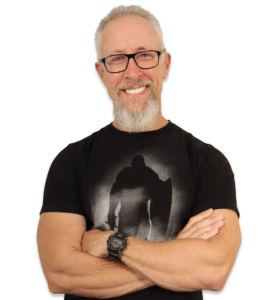 About Jim Edwards
With almost three decades of experience in online sales, Jim has made a name for himself as a trusted advisor to entrepreneurs, coaches, speakers, and professionals looking to take their message to the next level.
Since 1997, Jim has been helping individuals create and publish their own books, craft engaging sales messages, and ultimately profit from their knowledge.
He was one of the first people on the internet to publish an eBook, a feat that landed him a feature in The New York Times in 1997. With a decade-long career as a syndicated newspaper columnist, he has spoken all over the world on topics ranging from sales copy to self-publishing and self-improvement.
Jim is the author of “Copywriting Secrets” and “7-Day eBook,” along with over 3 dozen other books.
His passion for helping others succeed is evident in the hundreds of thousands of people he has helped through his books, products, and newsletters.
Connect with Jim:
Website: https://jimedwards.com
LinkedIn: https://www.linkedin.com/in/thejimedwardsmethod/
Instagram: https://www.instagram.com/thejimedwards
Facebook: https://www.facebook.com/JimEdwardsFan
X: https://x.com/RealJimEdwards
YouTube: https://www.youtube.com/@jimEdwards