
Have you ever wondered if you’re missing the clues that are pointing you to your true purpose? On this episode of Speaking with Confidence, we tackle one of the most important questions anyone can ask: What if your unique design isn’t something you have to invent, but something that’s already waiting to be discovered in the signals of everyday life?
I’m Tim Newman, and today we dig deep into the art and science of finding and living your purpose, with the help of a truly fascinating guest, Caleb Matthews. Caleb Matthews is the founder of The SeeLink, a renowned speaker in the spiritual strategy space, and the creator of the SSB method (spirit, soul, and body). With two decades of experience helping thousands decode the hidden signals in their dreams, personal history, and daily frustrations, Caleb Matthews brings insight from new age festivals to meeting rooms with government leaders, and his radio broadcasts have reached millions across Africa.
In our conversation, we unpack what it really means to have a “DNA of Design,” why so many people struggle to interpret their own purpose, and the crucial role that our spirit, not just our mind or body, plays in guiding us. Caleb Matthews shares his own remarkable journey from practicing speeches with stuffed animals to speaking at a Kenyan orphanage at 18, which was a life-altering lesson in gratitude and the power of perspective.
We explore why Western culture often sidelines the spiritual side of ourselves, and how reawakening it can be a powerful anchor, especially in times of crisis. We also get very practical: how can you start recognizing everyday signals and “dots” that point toward your calling? Caleb Matthews offers simple strategies, including the importance of writing down and reflecting on your dreams which, he argues, are not just random brain static, but coded messages from your deeper self (or even the divine).
Some of the things we covered in this episode include:
Caleb Matthews’s unique method for discovering purpose through spirit, soul, and body
The transformative experience of speaking in Africa and what it taught about gratitude
How Western society tends to diminish the role of spirit in personal growth and why that matters
The essential practice of recognizing and interpreting dreams as guides for your life
Specific reasons why most people miss the clues to their purpose by rushing from A to Z
The importance of staying connected to awe, wonder, and childlike curiosity in adulthood
The dangers of stuffing down conscience and emotion and how to open up again
How who you surround yourself with (the five people you see most) shapes your identity and fulfillment
The “three Cs” of construct, conform, and contract in self-development
Practical tips on dream journaling and the first question to ask when interpreting your dreams
The significance of safeguarding your senses in a noisy, social media-driven world
Lessons learned from speaking across more than a dozen countries: every audience is different, yet fundamentally the same
If you’ve ever wondered where your purpose is hiding or how to listen to your life for clues you might be missing this episode will give you both inspiration and clear steps to move forward. Plus, Caleb Matthews shares how you can take his free “DNA of Design” quiz at calebmatthews.net to get started on your own journey toward discovering your design type.
I hope this conversation challenges and empowers you to look deeper, listen closer, and take the next step in living out your unique calling.
Learn more about your ad choices. Visit megaphone.fm/adchoices
Transcript
Tim Newman [00:00:00]:
Most people think they're searching for their purpose. But what if the real problem isn't finding it? What if you've just been missing the clues? Welcome back to Speaking with Confidence, the podcast that helps you build the soft skills that lead to real results. Communication, storytelling, public speaking, and showing up with confidence in every conversation that counts. I'm Tim Newman, a recovering college professor turned communication coach, and I'm thrilled to guide you on a journey to becoming a powerful communicator. Today's guest is Caleb Mathews. Caleb is the founder of the C Link and one of the most important versatile speakers in the spiritual strategy space. Over the past 20 years, Caleb has helped thousands decode the hidden signals in their dreams, personal history, and daily frustrations to discover their unique purpose.

Tim Newman [00:00:58]:
His work has taken him from new age festivals to Bible college classrooms, from remote African villages to meetings with government officials. And his voice has reached millions through his international radio broadcasts across Africa. Caleb's proprietary SSB method that's spirit, soul and body, bridges deep spiritual insight with practical real world strategy. He's here today to help your audience finally see the link between who they are and who they're designed to become. Caleb, welcome to Speaking with Confidence. Looking forward to it?

Caleb Mathews [00:01:33]:
Absolutely. Tim, thank you for having me on the show. I really think we're going to dive deep and get into some really juicy stuff. Thank you for the invitation.

Tim Newman [00:01:41]:
Oh, sure thing. We're going to talk some deep and fascinating things that I think is really going to be very thought provoking. Where I want to start really is, you know, you said you've been speaking since you were 18, but the story behind that to me is pretty wild. You practice speaking to a room full of stuffed animals before you ever step in on stage. So walk us through how that led to you speaking in Africa.

Caleb Mathews [00:02:06]:
That's right. I love that segue. It really did. The early years of entrepreneurship is really the one of the pillars that I believe in, the sea link. And this is the early years for me that helped set me up to Africa by speaking, you're right, to a room full of stuffed animals as my first captive live audience. And the great thing about practicing with stuffed animals, your, you know, your bestie, your stuffy, your toys is they you can go into whatever childlike imaginations and joys you want without any judgment or fear of rejection or any of that. It's just, it's a great training ground. It was for me to be able to play, practice my gift and my passion for communication.

Caleb Mathews [00:02:50]:
One of the jokes I say is That I came out of my mommy's tummy blabbing and talking like I was meant to be a speaker and a talker from the day that I was born. So my stuffed animals were my first fluffy audience. Of course, my first breathing audience was the neighbor's dog I was able to speak to as well. With no judgment.

Tim Newman [00:03:10]:
Yeah. And it's, isn't that really the key? If we could always just think about there's no judgment because most time there's no judgment anyway. The only people doing the judgment is ourselves.

Caleb Mathews [00:03:21]:
That's right.

Tim Newman [00:03:23]:
So your first real speaking audience was an orphanage in Kenya. Talk about that experience and the perspective and what you actually learned from that experience and what most people miss from, from being the comfortable environments that we actually live in.

Caleb Mathews [00:03:44]:
That was a real eye opener for me at the age of 18, being in that orphanage in Kenya because the poverty in these countries, you're well traveled, Tim. For myself being due into Africa, it was the first eye opening experience for me outside of North America to, to really get in the trenches of what deep poverty is. Now I'm not diminishing what poverty is in Canada or the United States or Mexico, but the, the deep poverty that's in a place like Africa. It hits you like it hit me when our translator pick us up from the airport to drive us to that village orphanage. And the, it just, it, it gets to you, but it also, you step back, you think, okay, I have nothing to be ungrateful for. So when I went to that orphanage and spoke to those orphans, many of them who had never seen a white person before, it was like I was the alien stepping off onto a different planet. It humbled me, it changed me because it taught me at a young age. And it was very, very important that my mother and my father, especially my mother, encouraged us to go to Africa, me and my family, to see this because it.

Caleb Mathews [00:04:52]:
Gratitude is built in you when you see others that are with less fortunate than yourself. So that, that was an important foundation for sure.

Tim Newman [00:05:00]:
Yeah. And where I didn't have that, that type of movement experience speaking in an orphanage, but I did, I went to Botswana. This was, I would say probably late 90s. And I was over there teaching to their equivalent of our usoc. And you know, some of the things that I saw there that truly was eye opening, I wouldn't say, maybe I would say shock things that you wouldn't actually normally see on any given day. Again, like you said, it's not to diminish the poverty levels that we have that we're aware of. But when you look at the two and you say, wow, it's, we are, we are blessed and we are lucky to, to, to have these things. But how, how do we, how do we help? How do we get from where we are to help the people that are less fortunate? And that, that for me was, was so eye opening and I've never forgotten it ever.

Caleb Mathews [00:06:08]:
So, yeah, it just, it hits you for sure. And it's just, it's important. And audience listening to this podcast, if you've not been outside the confines of your neighbor, you have the opportunity to, especially when you're younger in life, do it, do it. Do not, do not hesitate.

Tim Newman [00:06:26]:
Yeah, yeah, I can't second that enough. But you know, Caleb, let me, let me just be honest with you here. I didn't always think that I did not for a time in my life I was like, why would you, why would you ever want to do that? But then once you, once you do, does change your life and it does open you up to those different perspectives. And once that happened and that mindset for me was way before I started teaching. Teaching. Right. So I never told that to students. But you know, the whole idea of like you say, getting outside of the country, getting that go someplace that is different and experience it, it's like I said, it is very eye opening, 100%.

Tim Newman [00:07:19]:
But let's talk about the DNA of design, which to me, again, I love where you're going with this. What does that mean and why do so many people struggle to figure that out?

Caleb Mathews [00:07:34]:
What that means is that we're all here designed for a purpose. Caleb Mathews Purpose is going to be different than Tim Newman's purpose. Tim Newman's purpose is going to be different than anybody listening to this podcast, Caleb, so forth. We each been designed scientifically to a level that cannot be replicated 100%. You know, in a world of AI cloning, there are things that can be done to replicate and imitate, but fully to the 100% degree can't. So first off, first truth is, is that you and I, we are down to the cellular level, unique. Nobody's been like us. Nobody is, nobody will be.

Caleb Mathews [00:08:10]:
That's number one. Number two is we all have our, each our design type. And this is one of the things that I talk about in the seven design types which one of my pillars see. Like we all have our individual design type. And this comes from the SSB method, which is directly tied into design type which you introduced me in the beginning. Spirit, soul and body. We are Human beings that have a spirit, conscience, wisdom, understanding, we have a soul, our mind, will and emotions, and we have a physical avatar. Now, the thing is, that's really tragic, and I want to hear your thoughts on this, Tim.

Caleb Mathews [00:08:45]:
Is that my perspective, my conviction is we live in the world, especially in the west, where we are taught we are programmed, especially by media, to value the mind and soul and the body. But the spirit is more or less left on the shelf as a. Oh, well, I'll get to that later. Or I'll, I'll, you know, I'll include God in my life later or energy or higher power spirit. I'll look after my spirit later, my conscience later. But I need to really drive my intellect or my soul and my body, and that's where the great tragedy is. What do you think?

Tim Newman [00:09:17]:
Oh, Kel, I don't know that I could agree with you any more than that. You know, and I don't, you know, as, as we go back and look through history, I, I don't know that I can pinpoint exactly when that, that kind of shift was. But you can see it, right? Even, even today, the whole idea of. And again, I'm not saying that we need to have, have religion in schools. I'm not. That's not what this is about. But the whole idea of taking it out and, and not really replacing it with anything and almost, And almost saying that it's a bad thing to talk about. I mean, when you think about, when you go, especially for those in the United States, you talk about Thanksgiving dinner, right? What are the things you don't talk about at Thanksgiving dinner? You don't talk about religion.

Tim Newman [00:10:10]:
You don't talk about politics. That to me is, I would say, sad. It's sad that you can't talk about religion with the people who are the closest to you in your life without having arguments or disagreements or throwing mashed potatoes around, whatever it is. I can get the politics thing, leave that out. But if you can't talk about, you know, that spiritual piece, right. That higher calling that, that, that. Because we all have it. I say everybody has.

Tim Newman [00:10:44]:
Even if you're an atheist and I don't really care what you believe in, because we all believe whatever. And I'm not advocating one over the other.

Caleb Mathews [00:10:51]:
Sure.

Tim Newman [00:10:52]:
Right. We all have to. We have to have that, that higher being, right?

Caleb Mathews [00:11:00]:
Yes. It's got to be. It has to be an anchor like our. We are, we're created spirit, soul and body. That I'm convinced our spirit is meant to govern our soul, our souls meant to govern our body. When I ask someone who says, oh, the spirit is not important, I say this to them. I say, okay, so what are you going to do? What are you going to do when it's a crisis? What are you going to do when something goes beyond your intellect? What are you going to do when something's outside your physical control? Who are you going to go to? Where are you going to draw strength from? What source of divine inspiration are you going to pull from? And history proves, looking back through our ancestors, looking through the founding fathers of American history, looking back through world history, every man and woman who ever changed the world, they didn't do it by their own strength. They had to pull from divine inspiration.

Caleb Mathews [00:11:47]:
And that's really the thing I'm trying to get at is that our spirit is meant to govern our soul. Here's an example. In the Bible, David says to himself, why are you downcast? Oh, my soul. Well, who's talking? It's not his soul talking to his soul. It's his spirit instructing his soul. That is what we're supposed to do with our soul when our soul is overwhelmed. We have to come back into a place of peace. And we can only do that with our spirit.

Caleb Mathews [00:12:10]:
And our spirit must be connected to the source, which is the creator.

Tim Newman [00:12:16]:
Yeah, and again, you're so right. I was listening to John Maxwell talk one time and he was talking about how he was with a very successful executive, multimillionaire, whatever. And he had asked John a question and he said, I want you to tell me about it, but not from, you know, the religious perspective. And John said, great, that's fine. And the guy said, well, I know you're always going to try and convert me. He said, no, I'm not going to try and convert you. It's, you know, you believe what you want. But let me ask you a question.

Tim Newman [00:12:52]:
Things are going really well for you now, just like you said, who you can lean on when it doesn't, because I don't care who you are as, because you're human, you're going to go through rough times. That's just, that's just part of life. And who are you going to lean on? And once you really start thinking about that again, I'm not trying to convert anybody, but that's what you have to really think about. Where, where's, where's your center? Where, where are you going to go back. Go back to. So again, 100 correct, for sure.

Caleb Mathews [00:13:23]:
It's got to go for the anchor. It's, I think it's the eye opening thing. We live in a world where the great battle of our time I don't think is any world conflict right now. And I won't get to that. But the great battle of our time is actually the battle between the trichotomous worldview and the dichotomous worldview. That is the number one battle that we're facing right now. In my perspective, the tri, the spirit, soul and body versus the soul in the body.

Tim Newman [00:13:49]:
So what's the solution?

Caleb Mathews [00:13:52]:
The solution is we must reach for that source we're talking about. We need to reach beyond our own understanding. That's why it says in the ancient text, the ancient scriptures lean not on your own understanding. Because the things of the spirit are foolishness to the natural man. If it's everything's within our solution, if we can solve everything ourselves within our own mind, our own body, then we're not only selling ourselves short, but we're selling our purpose on the earth short. Because we are only settling for the good instead of the God. Because the enemy of the good is when you're walking your call on with God.

Tim Newman [00:14:34]:
Say that one more time. I love that. I love that.

Caleb Mathews [00:14:37]:
The enemy of the good is when you're walking in your calling of God.

Tim Newman [00:14:44]:
Just let that sit for a second and think about that. That's very powerful. So let's shift just a little bit. You say people miss the dots in their lives because they're rushing from A to Z. And I think we're all guilty of it at times. But what are some of the everyday signals people might overlook that actually could actually be pointing them toward what their calling is?

Caleb Mathews [00:15:12]:
Well, I want to start with what began for me at the age of six and that is dreams in the night season. I believe that many, many people, myself included, we're sometimes. We're our own worst critic, right? Oh yeah, wake up from. We could wake up from these dreams that we have in the night, think, oh, that's an interesting movie that I saw. Or that couldn't possibly mean something that's so abstract and Narnia like and wild and just the metaphoric imagery just possibly can't have any meaning. But they do. Our dreams are constantly instructing us. How do we know this? We look at history.

Caleb Mathews [00:15:47]:
Harriet Tubman is guided her dreams. Mandelev had his solution, you know, in the. In history, through his theory, through a dream as well. Different members of history follow their dreams. Therefore we're no different. In fact, we spend one third of our life scientifically is spent in the dream state. So about the time I reach 60 years old, some of our audience listening to this are already 60 years old or older, will have slept 20 years of that 60. There's an important gap going on there.

Caleb Mathews [00:16:17]:
And that's one of the main things I think people overlook is dreams. Oh, that's silly. Oh, it's random. No, they're messages, they're, they're the dots between your potential and your purpose.

Tim Newman [00:16:27]:
Yeah. And you know, when we, we talked about this, you know, in, in a pre interview, to me this is, is really fascinating and I want to come back to the dreams here in a minute. But, but before we go into that, you know, in talking about the dots and looking at things, in hindsight, what's a moment in your life when you thought you were completely off track and then later realized it was actually part of the design?

Caleb Mathews [00:16:53]:
I would say my years in the corporate world recently, in my adult years, being in the 9 to 5, working 40 hours a week behind a desk, being very good at it. Here we go back to the good thing again. And some days showing up for work, even though I was very successful and saying to myself and to God, God, I'm good at this, but surely I'm built for more than this. I, I gotta be way off the rails. Like some of those conversations having with God, you know, on the way to work, it's like, okay, I, I, I feel like I'm way off track here, but actually that season where I felt like I wasn't fully aligned, was actually training ground and preparation for being launched out in which what I'm really supposed to be doing, which what I'm doing right now on this podcast is part of that, like being a speaker, that's always been my number one, you know, the motivate and the workforce. Those years where I felt off track, actually, it was, I was marinating, I was being prepared for the main stake.

Tim Newman [00:17:49]:
Yeah, but, but you know, you're right. And I think everybody, if they, if they look at their, look at themselves critically and they look at the things that, that they've chosen to do that, that they've done, I think everybody can, can find something along those lines, you know, with, with themselves. And I'm kind of, kind of like you in that. Being in education for as long as I was and knowing at some point that something just wasn't right, you know, it, it wasn't just, wasn't just something couldn't put your finger on. Right. But something just wasn't right that you, that, that I wasn't actually living up to whatever it was that I thought that I should be doing, that I felt that I was doing that. Even people could see it, right? People would say, tim, Tim, what's, what's going on? What are you doing? You know, and when other people see it and you see it and then you don't make those adjustments, that's where I think we really run into a lot of regret, where we run into a lot of interpersonal guilt. And if we just.

Tim Newman [00:19:00]:
Again, I'm not advocating anybody go out and quit their job. I'm not advocating for anybody to go and do something rash, right? There's gotta be a plan. There's gotta be those types of things, right? But, but when you see it and you feel it, if you don't, if you don't start making those adjustments and changes, it's going to cause you more personal harm, whether that is mind, body or soul. Right? Because especially us as men when we internalize those types of things. What that does to us physically and healthy is one thing. What that does to our mind in our spirituality is, Is far worse.

Caleb Mathews [00:19:48]:
It is. And to go against conscience is neither right nor safe. As Martin Luther said, and he was right. If we stuff our conscience, we stuff that navigator compass that's within our spirit and say, oh, that's. That can't be what's beckoning me onward. Whether that's shifting a career or making a life decision or changing a mindset or perspective. Perspective, we just stuff it. It's not going to be good.

Caleb Mathews [00:20:16]:
You and I both know, Tim, and our audience knows this, that if we stuff our emotions and feelings and our conscience, our spirit, we try to quench the voice of the spirit, it's only going to try to bubble and surface again. It's like shaking a. A soda can. And you shake it and you shake it so hard and then finally you open it. Well, it's going to blow up in your face if you keep on shaking it and not letting it out. We got to let it out. We got to, to let out these directions. And part of that is being willing to be open.

Caleb Mathews [00:20:44]:
We have to be willing to be open to whatever path the spirit guides us in. And it may offend our minds. In fact, if it does offend the mind, usually, usually that's God speaking.

Tim Newman [00:20:56]:
Exactly. Exactly. You know, and it's, it's funny because I joke about it, you know, you just bury it. Just bury it deep down inside and never bring it up again. Right? Just keep putting, you know, punch it right down and I had a conversation with my daughter. She. She's just a few years younger than you. About some things that happened in my life that nobody knew about, that my wife didn't know about until about six months ago.

Tim Newman [00:21:27]:
Right. And when I told my daughter that one story, five other things just. Just came out. Right? Because I had that opening. Even though I told my wife, even though I told a few other people of what happened, I think maybe it's the telling of that story made a bigger opening. Right. And allows those things to come out, and that's what we have to do. And again, I'm gonna say, especially as men, because we're.

Tim Newman [00:22:03]:
We're trained. The society has trained us to. To not be able to. To share thoughts and feelings and those types of things. And the reality is, if we don't, this. This is the society that. That we actually get. And that goes back to the question that you asked me.

Tim Newman [00:22:19]:
Where has, you know, the. The whole. The whole idea of spirituality gone?

Caleb Mathews [00:22:23]:
Yep, exactly. Our society, we live in a society especially in the West. Especially in the West. I'm not saying the east is perfect. Let's put especially in the West. Were programmed to quench that inner child, the awe and the wonder of, oh, we got to get to adulting. We gotta. We gotta stuff that.

Caleb Mathews [00:22:41]:
And, you know, like, anytime where you're processing your emotions or feelings or be on the wonder, then we just gotta push that aside, get responsible. Right? Like, I'm not advocating for not being responsible, but. But we have to also enjoy the fragrance along the way. That's. That's one of the things that one of my late mentors taught me, is one of his greatest passages of just wisdom that he passed on to me. He said this to me, Caleb. He said, even though you have a destination, a purpose that you're going to go to, don't forget to enjoy the fragrance of the flowers along the way. Don't forget the awe, the wonder.

Caleb Mathews [00:23:16]:
Don't lose it. In fact, this man's main exhortation to me was, don't lose the awe. Awe. Don't lose the wonder. Because if you lose the awe and the wonder of the journey, then you've lost everything.

Tim Newman [00:23:31]:
Yeah. Yeah. And that kind of. Let's get back to talking about dreams, because that's the other piece, right? Dreams contain messages that help us guide our life. But most people just. They wake up, they grab their coffee, forget about them, and they rush out the door to start their day or rush off to work, rush off to whatever it is that they're going to do and never actually go back and think about it. Why should we truly be paying attention to our dreams? And how can we interpret or attempt to interpret some of those things that are in our dreams?

Caleb Mathews [00:24:08]:
We should pay attention because it's a big chunk of time, as we were talking about earlier, that by the time our head hits the pillow before we wake up, that time in between, we're going to be spending seven, eight, nine hours in that dream state. And we were created that way just by random happen chance or oh, that's just a random slot of time and that this doesn't mean anything. There's nothing by mistake when it comes to human design specifically though within God's design of how we're wired. And dreams are a big part of that. Dreams are always instructing us. And the, the thing is, is when we could lose sight of our dreams, teaching us the way these codes, these messages, we're not writing them down. I always keep a dream journal next to my bed. In fact, if we write dreams down, we steward them, we treasure them.

Caleb Mathews [00:24:56]:
It's like the parable of the talents that Jesus talked about in the Bible. If we use our talent, we're going to get more. If we think, oh, this isn't important to me, then we're not only telling God, but we're telling our subconscious that, oh, this isn't important to me, I'll get to it when I get to it. And what's going to happen then? You're right. As you were saying there, Tim, when we walk the dog, when we take, we drink the coffee, we go to work, it's going to fizzle out, it's going to be gone. So we have to treasure these things by actively taking an action to trigger more memory, recollection, and ultimately more dreams. Because the people who treasure them down, write them down, are going to get more. The one that doesn't, you're probably not going to get a lot.

Caleb Mathews [00:25:32]:
Like when I speak with people at these festivals and fairs and workshops and conventions that I speak in dreams to in person and online, people that tell me, oh, I don't dream, like, okay, well, when's the last time you wrote yours down? And then, then the conviction hits. It's like, oh, well, it's been, it's been years. Right. But I'm here, I'm curious to hear your thoughts on that.

Tim Newman [00:25:51]:
Yeah, that's a, that's a very interesting concept of the more you do it. Just obviously the more you do anything, the better you're going to get at it. Theoretically, the, the, the more proficient and it's going to be. And the thought that it really triggered for me is this, with the prevalence of dementia and Alzheimer's that we're really starting to see and for, for whatever reasons, we're living longer. We've, we've, we're, we're taking in more things that are toxic to our body, medications. So I, I'm not, Again, I'm not. I don't know why that, why these things are happening, right? But we understand that dementia and Alzheimer's is, is skyrocketing amongst society. I wonder if by remembering and writing dreams down, if that helps the brain function better and longer at a, and at a higher level.

Tim Newman [00:26:57]:
Just like reading, right? We know what reading does. We know what watching TV does, right? We know watching TV or having our face stuck in our phones or electronic devices, what that does to our brain. We know what reading does almost the exact opposite. We know what I say. Mind games, but critical thinking, mind games like sudoku and those types of things, what that does to our brain. I wonder what dreams do you.

Caleb Mathews [00:27:23]:
Exactly. Dreams. Dreams really are a mirror. And when we look at them, what we behold, we become. And down to the scientific level, mere neurons. I'm not sure if you've heard the terminology before, Tim, but mirror neurons, when, when you're observing something, the, the law of observation within mirror neurons, Dr. Caroline Leaf has a whole breakout of what happens within mirror neurons. But what happens is, is when you're looking at something, when you're focusing on something, the neurons and your neurological pathways within your brain, all the way from the brain to the gut, from the brain to the heart, there's a whole highway of neurons that are connected.

Caleb Mathews [00:28:03]:
But it all has to do with how we're training our brain. And that heart connection and dreams is a part of that. I 100% believe that, that when we treasure our dreams, we write them down. We seek God, we seek higher power, seek spirit, you know, we seek understanding, we seek wisdom above all things, then that's going to play out in our life. Because what somebody talks about the treasures of the heart out of the abundance of the mouth, the treasures of the heart speak. And the more that somebody looks at something, the more they're going to become like something we are, like who we hang out with, right? Like Tim and I, we're hanging out together, having a great conversation. If you hang out, people bring you out and you're going to be around that, that group. If you bring around people who are bringing you down, getting around that dreams are the same thing.

Caleb Mathews [00:28:46]:
When we're treasuring this language, it's going to play out in our lives.

Tim Newman [00:28:50]:
Yeah. It just makes sense. It's logical. Right. Just like anything else. And you brought up the whole idea of who you hang out with, and I talk about that a lot. The five people who you hang out with the most are representative of who you are and what you're becoming. You're either.

Tim Newman [00:29:12]:
You're either having people that fill you up or people that are emptying you out. And if you surround yourself with more people that are emptying you out, pretty soon you're going to be empty and you're not going to be able to fill other people up. Yeah.

Caleb Mathews [00:29:26]:
And that falls into the three Cs. I have a perspective for the three Cs that every one of us as human beings have. Construct, conform and contract. And a construct is this construct that we live in the world right now. We either adhere to the majority of. Oh, everybody else is following that construct, or you follow your own design. That's where we get back into design conformity. If I conform to somebody else's peer pressure, then I'm going to be another clone.

Caleb Mathews [00:29:54]:
But if I conform to the image of how God created me, my design, that's going to follow along that path. And finally, the one that wraps the whole bow together is contract. And what I mean by that is who we hang out with as we go off of that, what we believe, how we perceive ourselves. And this includes what we believe about dreams. If we believe that our dreams are messages that are guiding us and speaking to us, then that's going to play out my life. If I disregard that and say, oh, well, I'm not going to make an agreement with my dreams because they just don't mean anything, then guess what? We're not going to dream anymore. We're not going to have that container. It's going to be filled.

Caleb Mathews [00:30:28]:
But our beliefs and our contracts, what we make is. Is everything. It's absolutely everything.

Tim Newman [00:30:34]:
How about interpreting our dreams?

Caleb Mathews [00:30:38]:
One of the first keys that I would recommend to our audience, those who are really curious about dream interpretation, is ask your dream. I say, the craziest people in life are the ones that don't speak to themselves. Ask your dream and love it. Love it. Yeah. And talk out loud and say, what is this a picture of? What is this a picture of? Because a German shepherd for me is going to mean something different than for Tim. Because for me, I know that a German shepherd when I was a kid was the one that chased me down the street and tried to scratch and claw and bite me. I was terrified of German shepherds.

Caleb Mathews [00:31:19]:
So for me, if I see a German shepherd in my dream, it's going to be with, oh, that's. I'm being chased by some bad creature or some negative force. For Tim, it could be something completely different. A German shepherd could be a positive thing. But that's why I don't really get into the whole dream books that mean everything for everybody. That's not. That's not the case. Everybody has their own individual conviction and feelings based on what they're seeing.

Caleb Mathews [00:31:42]:
So there's a whole world there at ball. But what is this a picture of? Is the first question we should be asking our dreams. And from there we can start to dive deeper into the golden.

Tim Newman [00:31:53]:
You know, that's. Again, that's so profound because you're absolutely right. We all see things and experience things from a different perspective. And, you know, just like we can see something back up. There's a lot of research out there in terms of eyewitness testimony in crime, right. Two people stand right next to each other, see the exact same thing, but they describe it differently, they experience it differently. And that's why, you know, there's so much in the criminal justice system, why there's so much discussion about eyewitness testimony. How can you have two people stand right next to each other, see the same thing and say two exact opposite things happened? And maybe that's not even truly what actually happened.

Tim Newman [00:32:56]:
And so if we take that when we're conscious, supposedly conscious, and translate that into a subconscious state or form, of course it would mean that it can't mean the same thing for two different people.

Caleb Mathews [00:33:14]:
Exactly. And you're touching in on a, a area that I, I love to speak about, and that is multiple perspective advantage mpa looking at a multifaceted diamond, right through the different lenses of that diamond. Crime scene investigation or eyewitness testimony? No different. Those who are sitting in a sports stadium that are watching a game, they have, they have a different seat. Some are in the lower level, some in the middle level, some in the upper level level. You're going to see the game differently. And as dreamers, we're all going to dream differently. Which, which is what I want to focus on here is, is length of dreams.

Caleb Mathews [00:33:53]:
Like, just because you have a dream that is two sentences long doesn't mean that it's any less important or meaningful than somebody who has a dream that's three pages long, there's still going to be Profound meaning behind them.

Tim Newman [00:34:05]:
All right, so let's take that a step further. You know, the whole idea of looking at things from multiple perspectives. Right. How can we train people to take a step backwards and see things from the bigger picture instead of just reacting from a day to day perspective?

Caleb Mathews [00:34:24]:
We must take a census of our census. And what that means is we need to be very vigilant of guarding our eye gates, ear gates, our senses. Because programming in the media and the world and the culture around us that's screaming, all their different things are screaming, tries to desensitize us from multiple perspective advantage. Which is why there's this mentality out there from my perception and experience individually that, oh well, you know, dreams are just, just for the mystical people, it's just for the new age people, it's just, just for the children. It's a, it's a, it's a children's, you know, like fascination or those who are just in that group or that community group. No, it's for everybody. And I was homeschooled. I'm very glad that I was homeschooled.

Caleb Mathews [00:35:19]:
No rap, no advocate rap against anybody who was in the public school system. But I'm so thankful. My mother raised me as a homeschooler because dream interpretation was part of the curriculum. She included that. The Hebraic method of dream interpretation, of treasuring your dreams for me and my brothers from a young age. And if I was raised in public school, a public school system, I wouldn't have been raised with that training, with that proper programming, that good programming into my senses. And that's why I want to encourage your audience to be really vigilant about what you allow to program you, whether that be spending too much time looking at the news. Like, it's amazing to me, like in the palm of our hand in, in this smartphone device that we have now that connects the world, that by the time that your feet hit the floor, my feet hit the floor after waking up from a great dream, or maybe you had a good dream that you had, but the first inclination that you have or I have instead of writing that dream down is to grab your phone and scroll the news.

Tim Newman [00:36:16]:
When your feet hit, before your feet

Caleb Mathews [00:36:17]:
hit the ground, you have access to all of the garbage that's going on in the world right now. Like, I'm not saying that there isn't struggles or hardships, but that is desensitizing me, is desensitizing our audience and us to actually being able to see from that multiple perspective damage. We must Take a census of our senses.

Tim Newman [00:36:37]:
Yeah. And it's so hard, at least for me anyway, to. You get your phone right next to your bed where I do. And it's my alarm clock. My phone is my alarm clock. So the very first thing that we do is pick up the phone, turn off the alarm and you see the, the alerts. Right. Whatever it is.

Tim Newman [00:36:57]:
And, oh, and you open it up, you look at the news, you look at this email, you look at this text message, whatever it is. And my guess is 90% of it is, is negative. You know, so before you even get out of bed, that mindset shift is here we go again, or whatever that negative, negative thought is. And it's so hard to, to combat that unless you go back to the old, to an old school alarm clock. And you put that, and you, and you don't have your phone by your bed, but you put it up on your dresser, you put it out in the other room or what have you. But we've just, we've just conditioned ourselves, ourselves to. You can't be more than arm's length away from that, from that phone.

Caleb Mathews [00:37:46]:
Yeah. And peace is the potting soil of revelation. And when there's no peace, there's no revelation. When there's no REM sleep, there's no dreams. Because you know, if you don't fall into REM sleep, you don't have deep sleep and REM sleep, then you're not going to dream, I'm not going to dream. We're not going to dream. And what we do have control over is exactly what we're talking about. We're out now.

Caleb Mathews [00:38:09]:
It's what we, what we feast upon. So, like not just eating physical food, talking about the eye food. The food for the eye, the food for the, where we put our attention. And that's what we do have autonomy over. And this is the battle between spirit and soul. Because our soul really wants to scroll, but our spirits like, there, there's, there's something more than scrolling out there. That's what our audience must take away with. We must take away with is our spirit saying to our souls, time for you to be governed by the spirit, not the other way around.

Tim Newman [00:38:44]:
So let me ask you this question you've spoken in well over a dozen countries. What have those experiences taught you most about communication? That most speakers never realize

Caleb Mathews [00:39:02]:
that every audience is the same and different. And what I mean by that is every audience has their own individual battles that they're fighting, but they're also different as well. Because every, every single platform. Every opportunity is a chance to be able to deposit something, something that's different than you've ever deposited anywhere else. And that's what's taught me over the years of going different places, from the mountainous jungles of the Philippines to the remote deserts of Africa to the, the structures of Europe to North America and beyond Costa Rica, is that everybody's on their own unique purpose and their journey, but they're also different, also the same as well. And when we look at it like that, that we all are sharing this common timeline, this sliver of time that we have on the Earth called time. We all have the same 24 7, same 365 days a year, the same clock, the same Gregorian calendar. We all have the same, but we all have our own individual journey within that calendar.

Caleb Mathews [00:40:18]:
And that's what blows my mind.

Tim Newman [00:40:20]:
Yeah. And you know, that's, that's one of the things I love about podcasting. Right. Because you. I'm talking to people all over the world on a regular basis and, and that's almost the exact same thing that I'm, that I'm thinking, you know, we're all, we all have, from a communication perspective, we, we all have the same problems and issues. Doesn't matter, doesn't matter where you are. And in a sense, I wouldn't say it makes me feel good, but it's comforting to know that it's not just me, it's not just us, it's everybody.

Caleb Mathews [00:41:00]:
There's always somebody better off, there's always somebody worse off.

Tim Newman [00:41:04]:
Yeah, absolutely. So tell us about C Link and what's one thing that we should know about it?

Caleb Mathews [00:41:13]:
Oh, the C link really is the message of encouraging the audience, of connecting potential to purpose those day by day nudges in the daytime and in the night season, and making sense of our individual DNA of design and our purpose on the earth. And the main message is, is to see all the links that are communicating around us on a day by day basis that can be missed by the chaos around us in the world.

Tim Newman [00:41:48]:
And where can people connect with you and take the DNA of Design quiz and start figuring out their own purpose.

Caleb Mathews [00:41:53]:
Sure. Calebmathews.net and of course the DNA of Design quiz is right in the top right corner. As soon as you go to calebmathews.net, you can take the free DNA of Design quiz to find one of your seven design types. And I'd be really curious to hear everybody what your design type is. There's seven different profiles, seven different types, and it will describe a little bit more of understanding for you of what your gifting is, what you're leaning towards. And that is a under five minutes. You can take that, it's free, it's complimentary. And from there you can dive into seeing the links in your individual walk.

Caleb Mathews [00:42:30]:
And there's a whole, whole community on the C link that love to get you part of that. The first step is that DNA design quiz. That's where you can connect me first and foremost. And everything springs off from there.

Tim Newman [00:42:41]:
You know, I, I'll put that in, in the show notes so that everybody has it. But Caleb, thank you so much for spending some time with us today. I love this conversation. It's. It's very enlightening and challenging at the same, at the same time, challenging in changing the way we look at things, changing the way we look at dreams and, and challenging us to, to make some changes that are going to help us live our lives in a much better, happier and helpful way.

Caleb Mathews [00:43:10]:
Thank you, Tim, for having me on the show. Speaking with Confidence, and thank you for this opportunity. And it's really good to have the conversation with your audience. Keep on bringing your message and thank you very much.

Tim Newman [00:43:21]:
All right. But talk to you soon. Be sure to visit Speaking with Confidence podcast.com to get your free eBook, top 21 challenges for public Speakers and How to Overcome Them. You can also register for the Formula for Public Speaking course. Always remember, your voice has the power to change the world. We'll talk to you next time.

Caleb Mathews [00:43:38]:
Take care.
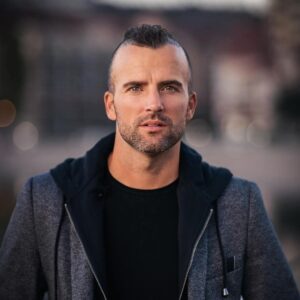 About Caleb Matthews
Caleb Matthews is an international speaker and spiritual strategist with more than 20 years of experience helping individuals communicate and live from their authentic design. He is the creator of the SSB Method, a practical framework that integrates Spirit, Soul, and Body to help people gain clarity, confidence, and alignment in both life and leadership. Having spoken across four continents and reached millions through radio broadcasts in Africa, Caleb equips audiences with actionable tools to bridge the gap between potential and purpose.
Connect with Caleb:
Website: https://www.calebmatthews.net
Instagram: https://www.instagram.com/theseelink/
YouTube: https://www.youtube.com/@TheSeeLink